

Published • 6 Aug 2026
If you manage unattended retail locations, your customers are already giving you feedback.
They may not send a message, stop your route team, or explain what they wish the location offered. But they do show you what matters through the way they shop. They show it in what sells quickly, what sits too long, when baskets change, which categories slow down, and where repeat purchases become less consistent.
That is the next step in customer-driven growth: learning how to read behavior before it becomes a bigger performance problem.
For operators managing vending, micro markets, smart stores, or all three within the same location, customer insight does not always come from surveys or direct conversations. More often, it comes from the everyday activity already happening across your business.
The opportunity is knowing where to look.
Understanding customer behavior in unattended retail starts with recognizing these everyday purchasing patterns as useful feedback.
Why customer behavior in unattended retail is often clearer than customer feedback
Customers do not always explain what changed.
A shopper may not tell you that the product mix feels limited. They may simply buy less often. Someone may not complain that the checkout experience feels slower than expected. They may stop adding a second item. A location contact may not ask for a different retail format right away, but performance may start showing that the current setup no longer fits how people want to shop.
This is why behavior matters so much in unattended retail.
In a staffed retail environment, a team member may hear customer comments in real time. In unattended environments, the signal is different. Operators need to pay closer attention to patterns across sales, inventory, product movement, payment behavior, location performance, and repeat purchase activity.
That does not make customer insight harder to access. It makes visibility more important.
Retail research continues to show that consumer behavior is becoming more fragmented, value-conscious, and influenced by changing digital expectations. McKinsey's 2026 State of the Consumer report notes that consumers' path to purchase is becoming more complex, with technology and sustained cost consciousness shaping how people discover, decide, and spend.
For unattended retail operators, that shift has a practical meaning: the same customers who expect convenience, speed, choice, and value in other retail settings bring those expectations into breakrooms, campuses, healthcare environments, residential properties, industrial locations, and secure market settings.
When the experience does not match those expectations, they may not say anything.
They may adjust their purchasing habits instead.
What does it mean to "listen" to shopper behavior?
Listening to shopper behavior means treating performance data as customer feedback.
It does not mean reacting to every small change. It does not mean replacing operator experience with a dashboard. It means using shopper activity to understand what is happening across locations with more accuracy than instinct alone can provide.
In unattended retail, customer behavior can show up through signals such as:
- Products that sell out faster than expected
- Items that rarely move, even after repeated restocking
- Categories that perform well in one location but not another
- Time-of-day or day-of-week purchase patterns
- Smaller baskets or fewer add-on purchases
- Changes in repeat purchase consistency
- Declining sales in a location that once felt predictable
- Stronger performance after a product, layout, pricing, or promotion change
Individually, these may look like normal variation. Together, they can tell a more useful story.
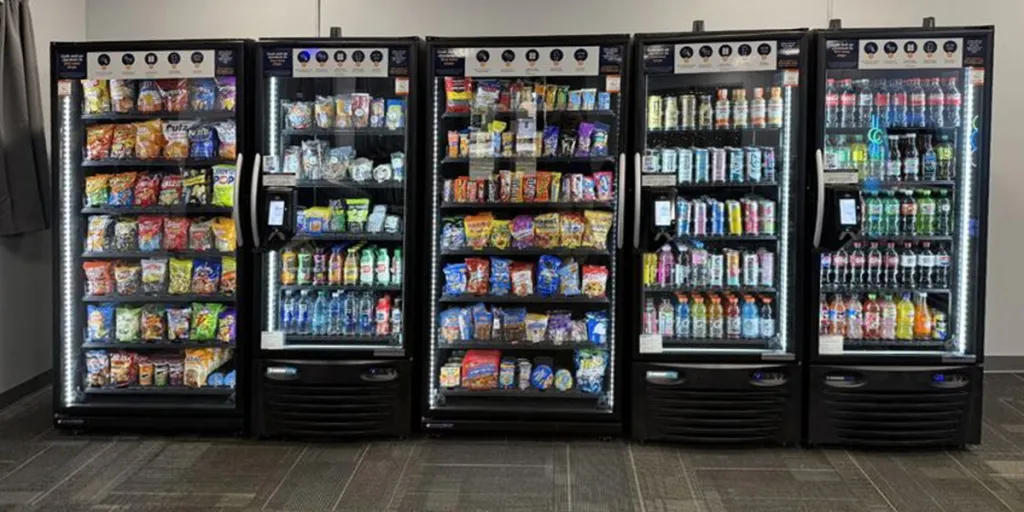
A vending bank may show that certain items still sell, but fewer shoppers are adding a beverage. A micro market may have strong traffic, but certain categories may not be turning fast enough for the space they take up. A smart store may reveal that shoppers are using the format heavily during certain parts of the day, creating an opportunity to adjust assortment around actual demand.
The value is not just seeing what happened. The value is understanding what that behavior suggests about the customer experience.
Why operators already have more customer insight than they may realize
Many operators already have access to useful customer insight. They may be used to reading it as operational reporting instead of shopper feedback.
Sales reports, product movement, inventory variance, category performance, and location-level trends are not just numbers. They are a record of customer decisions.
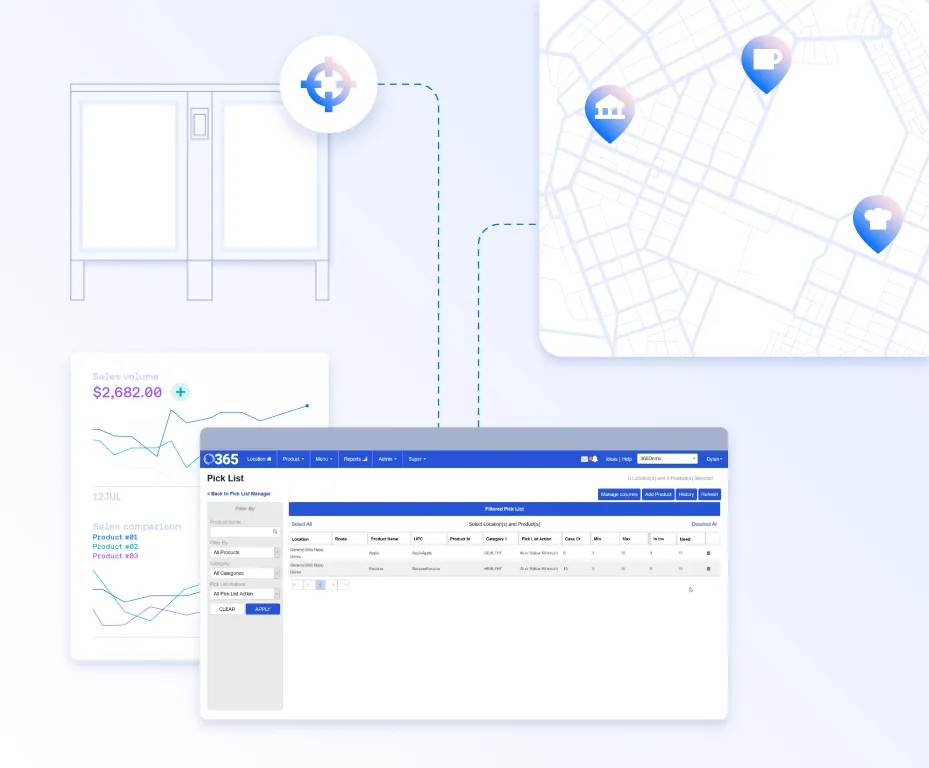
For 365 customers, ADM is one example of where those signals can become easier to see. 365 ADM gives operators visibility across sales, inventory, product management, reporting, and real-time business performance, helping teams make informed decisions across a single location or a larger network.
That matters because many unattended retail businesses are no longer operating one simple format in one predictable environment. An operator may manage vending, a micro market, and a smart store within the same account, each serving different shopper needs at different times.
Without connected visibility, those environments can feel separate.
With better visibility, operators can start comparing behavior across formats and locations:
- Is a product underperforming everywhere, or only in certain locations?
- Are shoppers buying differently in a smart store than they do in the nearby micro market?
- Are vending sales flattening because demand has changed, or because the assortment needs attention?
- Are certain categories stronger during specific shifts, days, or seasons?
- Are repeat purchases holding steady, or becoming less consistent over time?
Those questions help operators move from "what sold?" to "what is the customer telling us?"
The difference between data and observation at scale
For many operators, unattended retail analytics can sound overly technical. In practice, it is simply a way to observe customer activity at scale.
People close to a location often pick up on useful details. The route driver sees which snacks are gone at every visit, the location manager hears requests for more variety, and the client knows that most of the traffic comes in the morning.
Those observations are useful, but they are limited to what one person sees or hears.
Data expands that view. It helps operators see whether an observation is isolated or part of a larger pattern. It can show whether a product is performing across multiple locations, whether a category is losing momentum, or whether a shift in shopper behavior is happening gradually enough that it might be missed during day-to-day operations.
That is where unattended retail analytics tools like ADM can support better decisions. ADM helps keep 365 system data connected and actionable across kiosks, smart coolers, dining, mobile ordering, and other parts of the operation, giving operators a broader view of performance.
The goal is not to make every decision more complicated.
The goal is to make the right signals easier to see.
What shopper signals should unattended retail operators watch?
Operators do not need to review every data point the same way. A better approach is to focus on signals that connect directly to shopper behavior and business performance.
1. Product movement
Product movement shows what shoppers are choosing and what they are ignoring.
If a product consistently sells through quickly, it may deserve more space, more frequent restocking, or placement in additional locations. If another product rarely moves, it may be taking up valuable space that could support a better-performing item.
The key is not to judge performance in isolation. A product that underperforms in one workplace may be strong in another. A better question is: where does this item fit the shopper base, and where does it not?
2. Category performance
Category trends can reveal broader shifts in customer preference.
For example, a micro market may show stronger movement in fresh food during lunch hours, while a vending setup may continue to perform well with beverages and quick snacks. A smart store may support a different mix because shoppers can browse more freely or buy across a broader assortment.
Category-level review helps operators understand whether the overall experience matches the way people want to buy in that environment.
3. Basket behavior
Basket behavior can show whether shoppers are buying one item quickly or building a larger purchase.
This matters because unattended retail growth is not only about traffic. It is also about whether the location encourages the right kind of buying behavior. If baskets are getting smaller, it may point to assortment gaps, pricing sensitivity, product placement issues, or a mismatch between the format and the shopper need.
A lower basket does not automatically mean the location is failing. It does mean the operator should look closer.
4. Repeat purchase patterns
Repeat purchases can show whether the location is becoming part of a shopper's routine.
A strong unattended retail location often earns repeat use because it fits naturally into the day. When repeat behavior softens, the cause may not be obvious right away. The assortment may feel stale. A competing option may have become more convenient. A product that used to drive regular visits may no longer be available often enough.
Repeat activity helps operators understand whether customer habits are holding steady or beginning to shift.
5. Time-based demand
Time-based demand shows when customers are most likely to buy.
This can help operators make smarter decisions about stocking, promotions, fresh food, and service timing. A location with early-morning traffic may need different support than one that peaks in the afternoon. A location serving multiple shifts may need a different product mix than one with a standard office schedule.
The location itself may not change, but the way shoppers use it throughout the day can reveal meaningful opportunities.

How this applies across vending, micro markets, and smart stores
The value of customer insight is not limited to one format.
Vending machine sales data can reveal whether a machine still fits the location’s needs, whether the product mix should change, or whether there is demand for a broader retail experience nearby.
In micro markets, data can show how shoppers move across categories, build baskets, respond to variety, and use the market throughout the day.
In smart stores, performance patterns can help operators understand how a more secure, flexible format supports locations where an open market may not be the right fit.
This matters because many operators now manage blended environments. A single account may include vending for quick access, a micro market for expanded choice, and a smart store for controlled, unattended retail in a higher-traffic or space-sensitive area.
The question is not which format is best in general.
The better question is: what does shopper behavior suggest this location needs?
NAMA's 2024–25 State of Convenience Services Industry Census notes that self-service retail and workplace amenities are helping drive strong growth in food and beverage access, while the mix of micro markets, vending, office coffee service, and pantry continues to evolve.
That evolution reinforces why visibility matters. As operators manage a broader mix of formats, they need a clearer way to understand which environments are aligned with customer behavior and which may need adjustment.
What if you do not have ADM?
If you do not have ADM, the principle still applies: you need a reliable way to understand what shoppers are doing across your locations.
Without strong visibility, operators may rely too heavily on assumptions, isolated feedback, or past performance. That can make it harder to know whether a location needs a product change, a merchandising change, a service adjustment, a pricing review, or a different unattended format.
At a minimum, operators should be able to answer questions such as:
- What products and categories are growing or slowing?
- Which locations are outperforming similar accounts?
- Where are out-of-stocks or slow-moving items affecting results?
- How do baskets change by location, time period, or format?
- Are customer habits becoming more consistent or less predictable?
- Which locations show signs of untapped growth?
If those answers are hard to find, the issue may not be the location. The issue may be the level of visibility available to the operator.
Growth is difficult to manage when the customer signal is hidden.
How to turn shopper signals into better decisions
Customer insight only helps if operators use it to make practical decisions.
That does not always mean making a major change. In many cases, the first move is smaller: review a product mix, test a new category, adjust inventory levels, change a promotion, shift space toward better-performing items, or compare similar locations more closely.
The best decisions often start with a simple pattern:
- Look at what shoppers are already doing.
- Identify where behavior has changed.
- Compare the signal across locations or formats.
- Decide whether the issue is assortment, format, access, timing, price, or experience.
- Make a focused adjustment.
- Review the result.
This approach gives operators a better way to respond without overcorrecting.
It also helps avoid two common mistakes: waiting too long because the signal is not obvious yet, or changing too much at once without knowing what caused the shift.
Customer-driven growth starts with visibility
Customers may not always spell out what they want, but they usually leave clues.
They leave them in the products they choose, the items they skip, the time of day they shop, the locations they return to, and the formats they use most often. For operators, those patterns can become a practical advantage.
If you already use ADM, start by reviewing the shopper signals available across your locations. Look at product movement, category performance, basket behavior, repeat activity, inventory patterns, and location-level trends. The goal is not to find one perfect answer. The goal is to see what your customers are already showing you.
If you do not have ADM, it may be time to ask whether your current tools give you enough visibility to grow with your customers.
In unattended retail, better decisions rarely begin with guesswork.
They begin with listening.
FAQ
How can unattended retail operators understand customer behavior?
Operators can understand customer behavior by reviewing sales, product movement, category performance, basket trends, inventory patterns, time-based demand, and repeat purchase activity. These signals show how shoppers are using a location, even when they do not provide direct feedback.
What shopper data should operators pay attention to?
Operators should pay attention to product sales, slow-moving items, out-of-stocks, category movement, basket size, repeat purchase behavior, location-level trends, and demand by time of day or day of week. These data points can help reveal whether a location's assortment, format, or experience still fits customer expectations.
How does ADM help operators see customer insights?
365 ADM helps operators view sales, inventory, product management, reporting, and performance data across their operation. For operators managing vending, micro markets, smart stores, or multiple formats within the same account, ADM can make shopper behavior easier to compare and act on.
Why does customer behavior matter for unattended retail growth?
Customer behavior matters because shoppers influence which products, categories, formats, and experiences perform best. When operators understand how shoppers are actually buying, they can make more informed decisions about assortment, inventory, promotions, and format strategy.
What vending machine sales data should operators review?
Operators should review product sales, sell-through rates, slow-moving items, out-of-stocks, purchase timing, payment activity, and location-level trends. Together, these signals can show whether the product mix and service strategy still match customer demand.