
Published • 18 Jun 2026
If you manage unattended retail locations, you've probably felt it: shoppers change faster than business models do.
Your equipment might still run perfectly. Your locations might still be stable. But what worked a few years ago can quietly lose momentum when the buying experience no longer meets people's expectations today.
In unattended retail, that disconnect rarely manifests as one big problem overnight. It shows up gradually, through smaller shifts in shopper behavior and performance. A location that used to feel predictable starts to flatten out. A few categories stop moving the way they used to. Repeat purchases become less consistent.
The pattern is simple: shoppers set the pace. Businesses either evolve to meet those expectations, or growth slows over time.
What does "customer-driven change" mean in unattended retail?
Customer-driven change means your shoppers' behavior becomes the clearest signal for what your business should do next. Not chasing every new idea or changing everything at once, but recognizing a reality that applies to every retail category:
Customers expect businesses to keep up with how they live, shop, and buy today.
Across retail, there's been a clear shift from broad, one-size-fits-all experiences toward more individualized, data-informed experiences shaped by consumer behavior.
You don't need to be a big-box retailer to feel this shift. Shoppers bring the same expectations to every buying moment, including:
- breakrooms
- workplaces
- residential and multi-family locations
- healthcare environments
- industrial sites
- campus and education settings
Unattended retail is part of the same world shoppers live in every day.
Why shopper expectations change (even when your locations don't)
When people hear "changing expectations," they often assume it means customers suddenly want different products.
Sometimes that's true. But more often, the bigger change is behavioral: shoppers get used to better experiences elsewhere, and they start expecting that same standard everywhere.
That pattern shows up across retail, where industry outlook reporting continues to emphasize how rising consumer expectations shape the way businesses compete and grow.
These changing expectations tend to show up first as performance signals, such as:
- smaller average baskets
- fewer repeat purchases
- slower category movement
- uneven location performance
- more "quick grabs" and fewer add-ons
At first glance, these can look like random variance. But in many cases, they point to something deeper: the current setup no longer matches how shoppers want to buy.
Why traditional vending felt limiting in some locations
Traditional vending has been the backbone of unattended retail for decades and continues to play an important role today.
But vending is often built around constraints that limit flexibility, including fixed planograms, restricted product variety, limited browsing and discovery, and little room to expand.
Vending hasn't become irrelevant, but it has faced new pressure to keep pace with changing customer expectations and technology-driven shopping behavior. Research on vending consumer behavior has pointed to that shift clearly.
As that gap grew, it created room for other unattended formats to gain traction, especially in locations where shoppers wanted more choice and a more open way to shop.
The micro market shift didn't happen without friction
Today, micro markets are widely recognized as a major driver of unattended retail growth. But early adoption was far from automatic.
There was real hesitation across the industry. Not because operators were against growth, but because vending already felt stable, familiar, and proven. Change introduced new variables.
Micro markets forced businesses to rethink how unattended retail worked:
- Open merchandising instead of closed machines
- Expanded assortments beyond traditional vending limitations
- Higher expectations for convenience and customer experience
- New conversations around shrink, security, and trust
This was not simply a new format entering the market. It was a shift in operational thinking. That matters today because it reflects a pattern the unattended industry has seen before:
Progress rarely happens because everyone agrees immediately.
It happens when changing consumer expectations make standing still harder than moving forward.
Micro markets and smart stores are examples of customer-led evolution
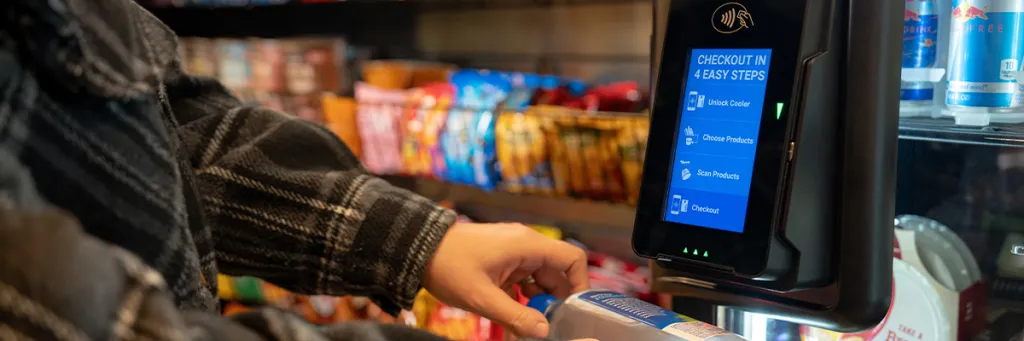
Micro markets and smart stores did not gain traction because they were trendy. They gained traction because they aligned with how people already prefer to shop:
- Browse and compare options
- Build a basket instead of making a single selection
- Make quick, self-directed decisions
- Move through checkout without waiting or friction
The growth behind these formats reflects a broader shift in customer expectations around convenience, flexibility, and control.
Micro markets are a primary driver of industry growth
NAMA's industry census reporting has shown micro markets growing from a very small share of industry revenue to a meaningful portion of total convenience services revenue, positioning them as a primary driver of growth.
That's not growth driven by hype. That's growth driven by demand.
And for many businesses, smart store formats represent the next step in extending unattended retail into new environments where space, security, or location requirements make a traditional market setup harder.
The point isn't that one format replaces another.
The point is this:
Shoppers influence what makes sense. Businesses that adjust faster tend to grow faster.
When your unattended retail setup reflects how people actually shop, performance improvements tend to show up in measurable, practical ways:
- More consistent sales week to week
- Healthier product turnover
- Stronger category performance
- Greater confidence in expansion decisions
- Fewer operational resets caused by friction or poor fit
The location may not change at all. But when the experience aligns with shopper expectations, it becomes much easier to improve results over time.
You are no longer asking customers to adapt to an outdated buying experience. You are building around the way they already shop.
The real advantage: evolving based on evidence, not guesswork
Here’s where many unattended retail businesses get stuck: shopper expectations are changing, but it’s not always clear what needs to change first.
That uncertainty usually leads to one of two mistakes:
- Waiting too long to adapt until performance becomes a bigger problem
- Changing too much at once without understanding what’s actually driving the decline
Neither approach is sustainable.
A better path starts with visibility. The most effective operators pay attention to what shoppers are already telling them through behavior, including:
- What sells quickly — and what never moves
- Repeat purchase patterns
- Category performance by location
- Changes in basket composition
- Demand shifts throughout the day or week
These signals already exist inside the business. The advantage comes from spotting them early enough to act.
What this means for current 365 customers
If you're already using 365 Retail Markets technology, you have a real advantage: you can make decisions based on real shopper behavior across locations, not instincts or isolated feedback.
That matters because in unattended retail, small shifts are easy to miss until performance starts to change. Seeing patterns early gives you more control over what happens next.
The goal is simple: stay aligned with your shoppers, so growth doesn't stall. That means making intentional changes based on what customers are actually doing, not assumptions.
The way customers shop today determines whether a format continues to perform or whether a different approach will deliver more growth. And in the blogs ahead, we'll break down how to spot those signals clearly and respond with confidence.
FAQ
What is customer-driven change in unattended retail?
Customer-driven change means evolving your unattended retail strategy based on shopper behavior and purchasing patterns, rather than relying on past performance or assumptions.
Why do businesses need to evolve beyond traditional vending?
Traditional vending still has a role, but in some environments, shoppers expect more choice and a different buying experience. When expectations shift, expanding into formats like micro markets or smart stores can support growth.
Why was there resistance to micro markets at first?
Micro markets introduced a different operating model, including open merchandising and new concerns around shrink and shopper trust. Many businesses resisted early on because vending felt more predictable and familiar.
Are micro markets really a growth driver?
Yes. Industry census data from NAMA has shown that micro markets are becoming a primary driver of growth in convenience services.
What's the main takeaway from this blog?
Shoppers change over time. Businesses that evolve based on shopper behavior tend to grow more consistently than those that stay locked into one model.